Inside the Design Journey: How Major Venues Come to Life
Delivering world‑class venues doesn’t happen overnight. Behind every iconic stadium and sporting venue is a carefully structured design process that blends creativity, engineering, collaboration and real‑world testing.
The Design Phase is a key step on our Roadmap to 2032, that starts with the appointment of a design team as the Principal Architect for the project. The appointed design team works hand in glove with GIICA as they progress through a series of crucial steps.
For our venues, this journey unfolds across nine key phases. Some run in sequence, others overlap to accelerate progress, but together they ensure the final venues are visionary, buildable and ready for the world stage.
Let’s take a look at how a major venue evolves from an idea into a construction‑ready design.
1. Design Response / Vision
The journey begins with pure architectural imagination. Designers explore bold ideas and creative possibilities, shaping the vision that underpins the project bid. At this early stage, the focus is on big‑picture thinking — establishing the character, ambition and identity of the future venue while beginning to test whether the initial ideas are feasible.
2. Concept Design
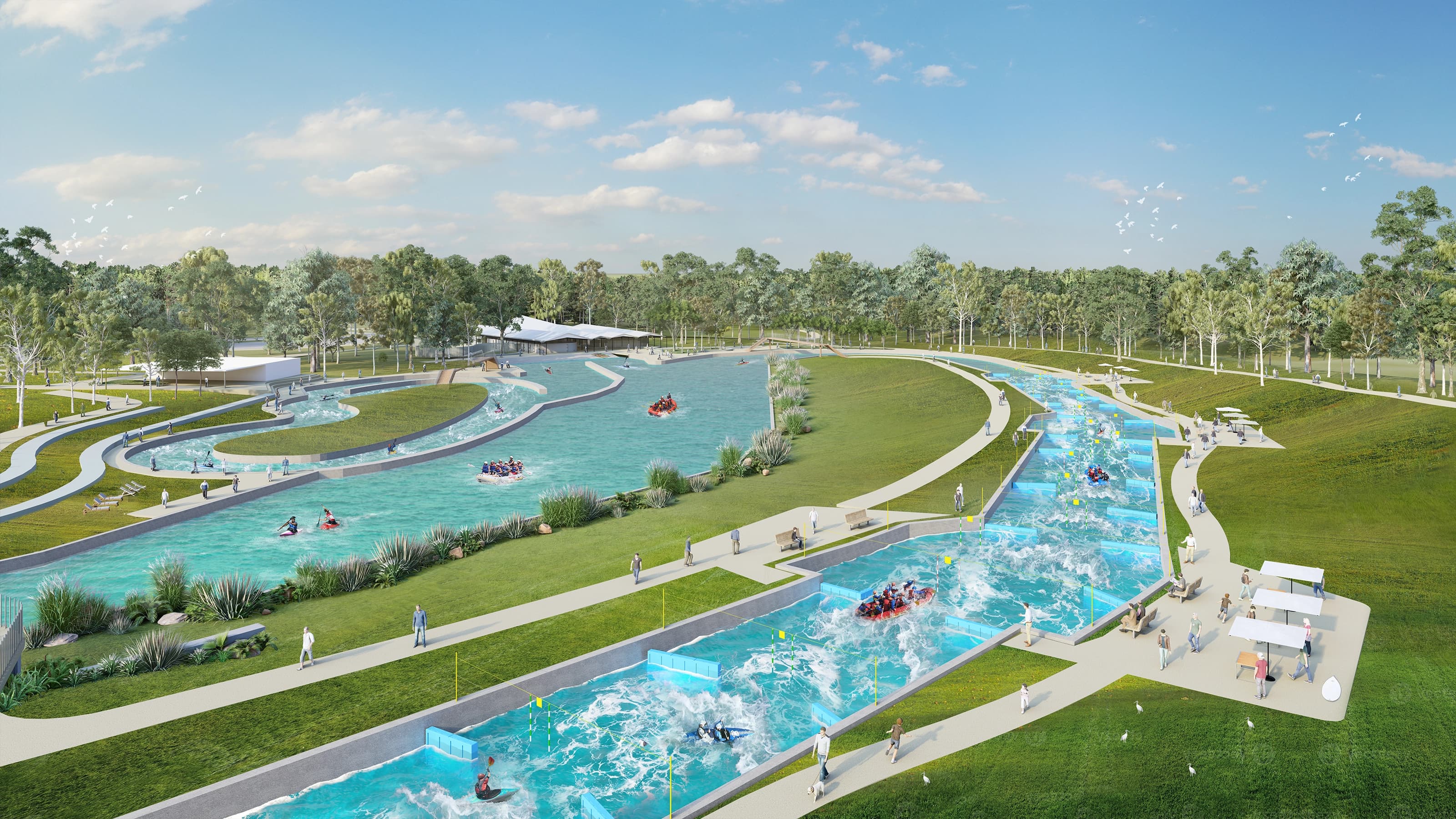
Once the Principal Architect team is formally engaged, the vision is tested against the project brief. This phase marks the shift from high‑level ideas to grounded design direction. The architect team begins working closely with the GIICA venue delivery team to validate concepts and ensure they align with site conditions, user needs and project goals. It’s the moment when imagination starts meeting reality.
3. Dual Early Contractor Involvement (Dual ECI)
A major shift occurs when two contractors join the process to stress‑test the design. Their involvement introduces competitive tension and brings real‑world construction insight into the project. Each contractor examines constructability, staging, methodology and supply chain considerations, ensuring the design is robust, practical and aligned with market realities. This stage is applicable to some of our venues, while others progress with only one Early Contractor Involvement.
4. Preliminary Design
With the design direction established, the project begins locking in key decisions. Preliminary Design focuses on defining major parameters such as the venue location and orientation and producing the information needed to support Early Works. Early Works prepare the site for construction and can include preparation and remediation work, demolition of existing infrastructure, relocating public utilities or upgrading other key supporting infrastructure. Stakeholder engagement becomes more structured, and the design gains clarity as the team prepares for the next level of detail.
5. Schematic Design
Schematic Design moves the project from broad concepts to coordinated architectural and engineering layouts. The work becomes detailed enough to support contractor involvement, and stakeholder engagement continues with more concrete material to review and refine.
6. Single Early Contractor Involvement (Single ECI)
After the competitive phase, one contractor is selected to collaborate closely with GIICA and the design team. With competition replaced by partnership, the focus turns to refining cost, methodology, and delivery strategy. The design advances toward a detailed design stage with high level of accuracy, becoming more precise and more closely aligned with the contractor’s approach to building the venue.
7. Detailed Design
Detailed Design is where the technical engine of the project truly accelerates. All engineering disciplines work intensively to resolve the design in full, coordinating structures, services, systems, and materials. Construction strategies and materials are finalised and specialist consultancies contribute to ensure every element is technically sound and ready for documentation.
8. Issued for Construction
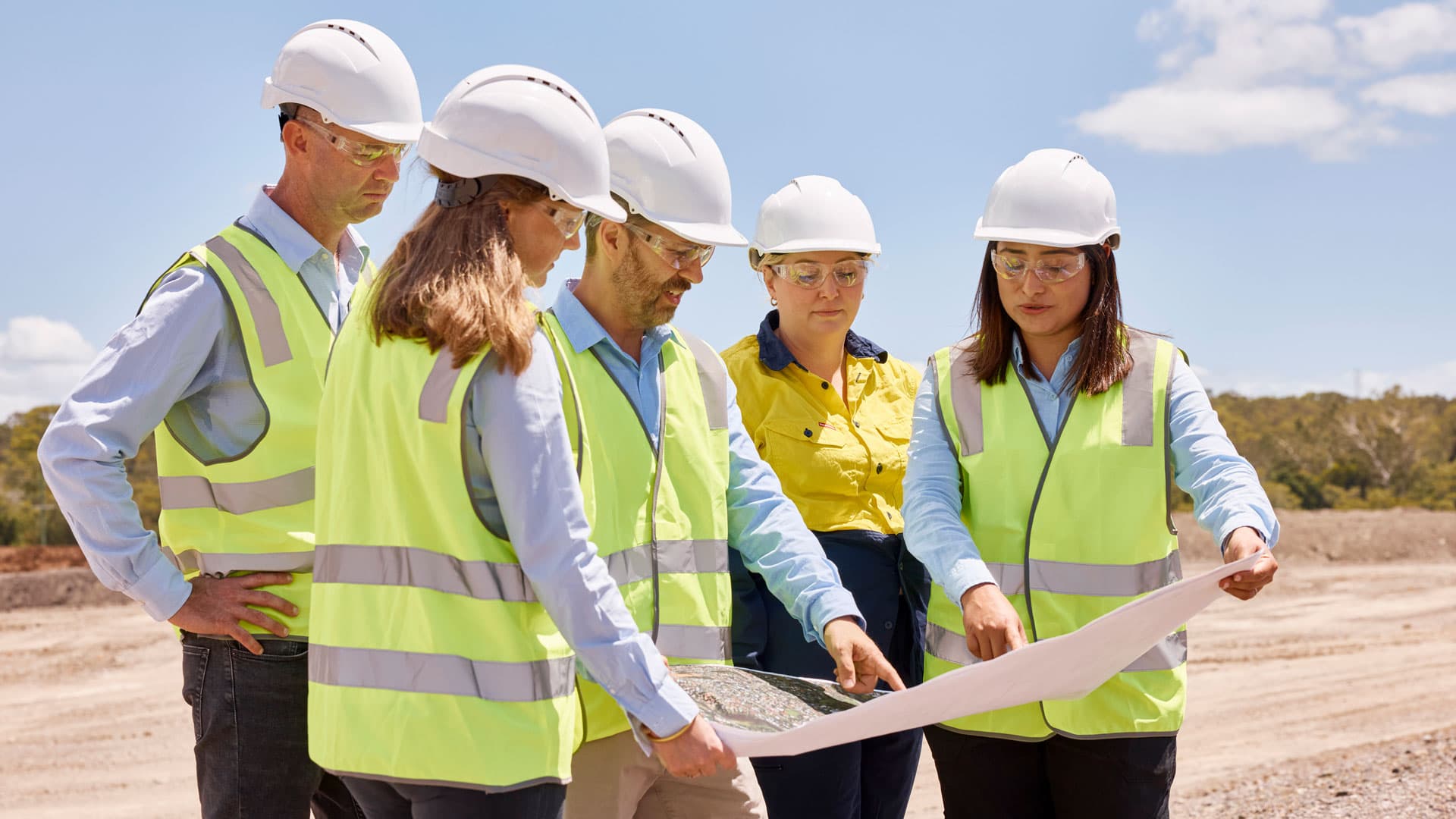
Once the design is fully complete, it is transformed into the documents builders will use on site. This is the final step before construction begins.
9. Construction
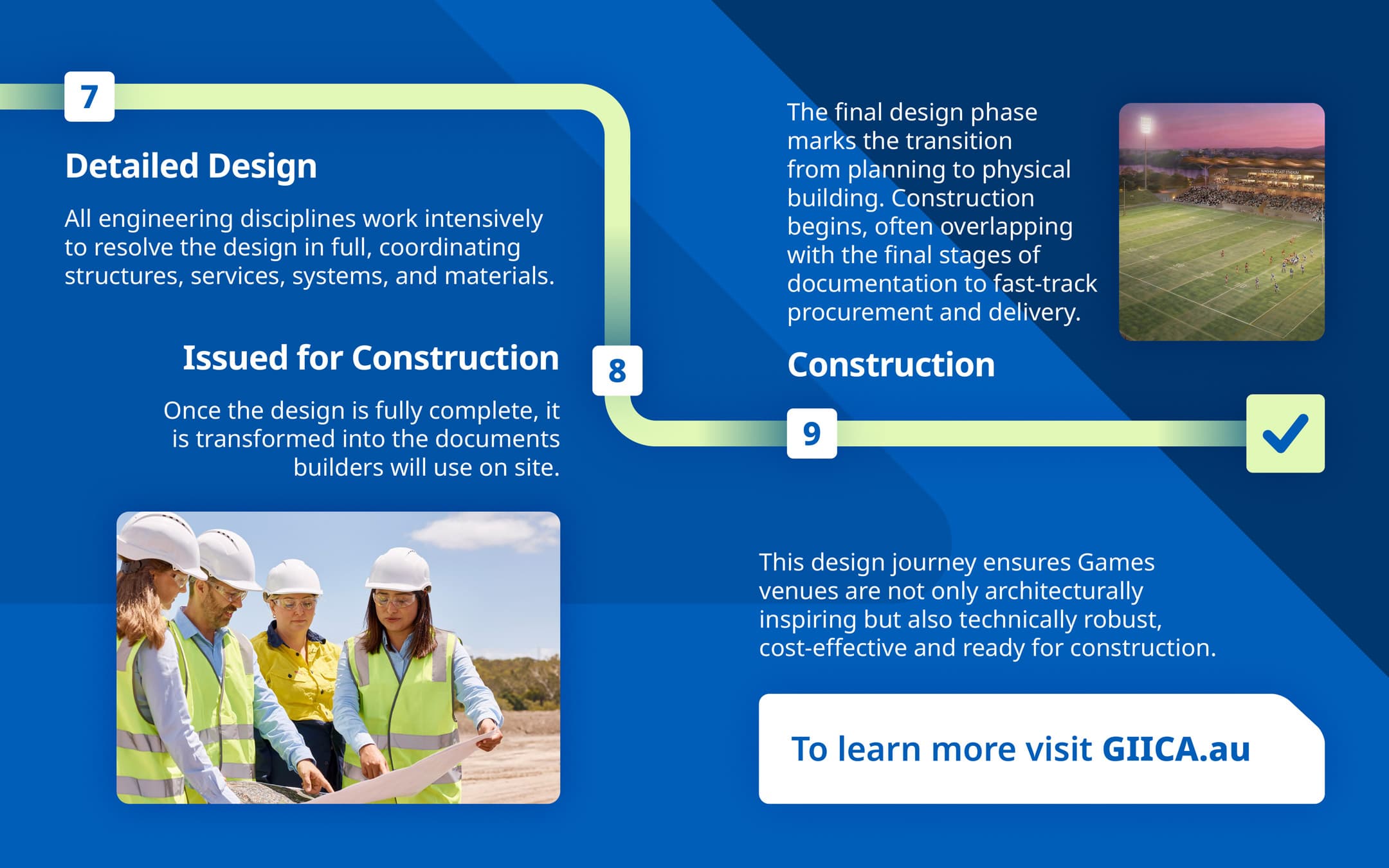
The final design phase marks the transition from planning to physical building. Construction begins, often overlapping with the final stages of documentation to fast‑track procurement and delivery. Contract documentation guides the work on site, and the vision that began as a sketch evolves into a world‑class venue rising from the ground.
This nine‑phase design journey ensures Games venues such as the Brisbane Stadium and the National Aquatic Centre are not only architecturally inspiring but also technically robust, cost-effective and ready for construction. It’s a process designed to deliver venues that will serve communities, athletes and visitors for generations to come.