Victoria Park yesterday: From windy place to wedge shots
Excitement is building across Queensland as work accelerates on two major new venues in the Victoria Park precinct: Brisbane Stadium and the National Aquatic Centre.
The inclusion of these venues in Victoria Park is just the latest chapter in the ever-evolving history of the precinct which has served as a gathering place for Traditional Custodians, farmland, a quarry, dump, rifle range, affordable housing quarter and military base. Over a series of three articles, we will share snapshots of the park’s past, present and future to highlight its rich and fascinating history, busy present and exciting future.
As you’ll see, Victoria Park has always been a place where Queenslanders have gathered to celebrate, play sport and share stories. Learn more about the future of Victoria Park as a diverse location for sport, entertainment and community events via the Queensland Government’s Victoria Park Precinct Legacy Plan.
Three-part series:
.%20State%20Library%20of%20Queensland.jpg&w=3840&q=75)
View over to Brisbane from the hospital at Herston across Victoria Park, looking south, ca. 1936. (n.d.). State Library of Queensland
Victoria Park yesterday: From windy place to wedge shots
Victoria Park – also known as Barrambin (“windy place” in the Turrbal language) – on Turrbal and Yagara country has a long and evolving history. What many know today as an inner-city parkland has changed significantly over the past two centuries, with each generation reshaping the land to meet the city’s changing needs.
A place to gather
For thousands of years, Barrambin was an important meeting and camping place in Goori society. Its low-lying terrain, water and food sources, and open spaces made it a natural gathering point for cultural, spiritual and social activities undertaken across a broader cultural landscape.
_Credit%20State%20Library%20of%20Queensland-1.jpg&w=3840&q=75)
Early settlement
As Brisbane developed through the 1800s and early 1900s, the land took on a wide range of uses. Different areas were used as Queensland’s first fringe camp for displaced Traditional Owners, for quarrying, brick making, farming and logging, and later for municipal services, becoming one of Brisbane’s first rubbish dumps and nightsoil depots.
At various times, the park also provided temporary accommodation for new arrivals and working families. It also has a strong sporting history used for horse riding, as a rifle range and for other leisure activities.
As you can see from the imagery held by the State Library of Queensland and Brisbane City Archives, extensive clearing and quarrying of the site over this period greatly transformed the natural environment.
.%20State%20Library%20of%20Queensland.jpg&w=3840&q=75)
View from Herston Road over Victoria Park, Brisbane, 1876. (n.d.). Credit State Library of Queensland
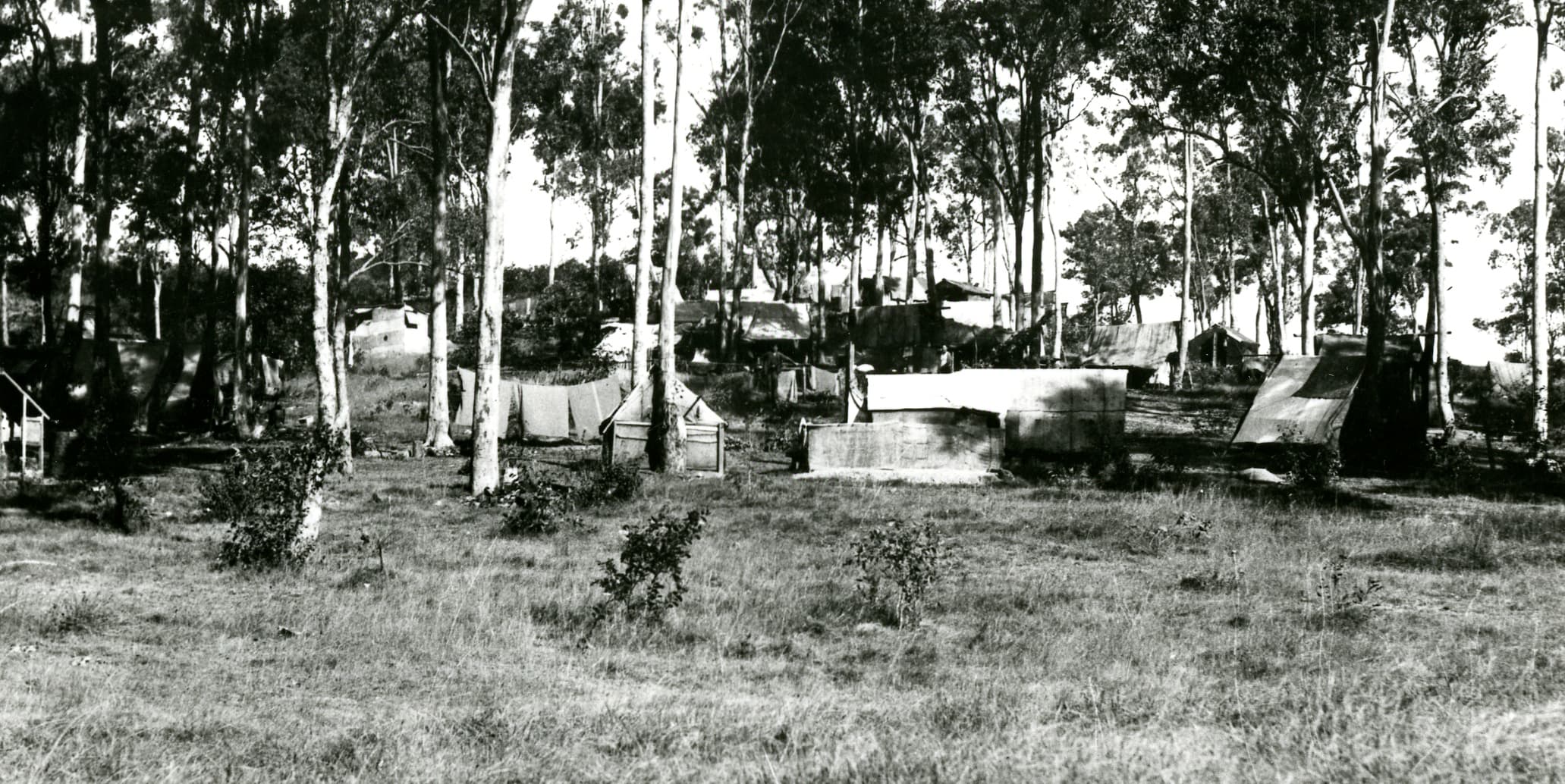
Victoria Park temporary housing in Herston, 1930s. Credit Brisbane City Archives
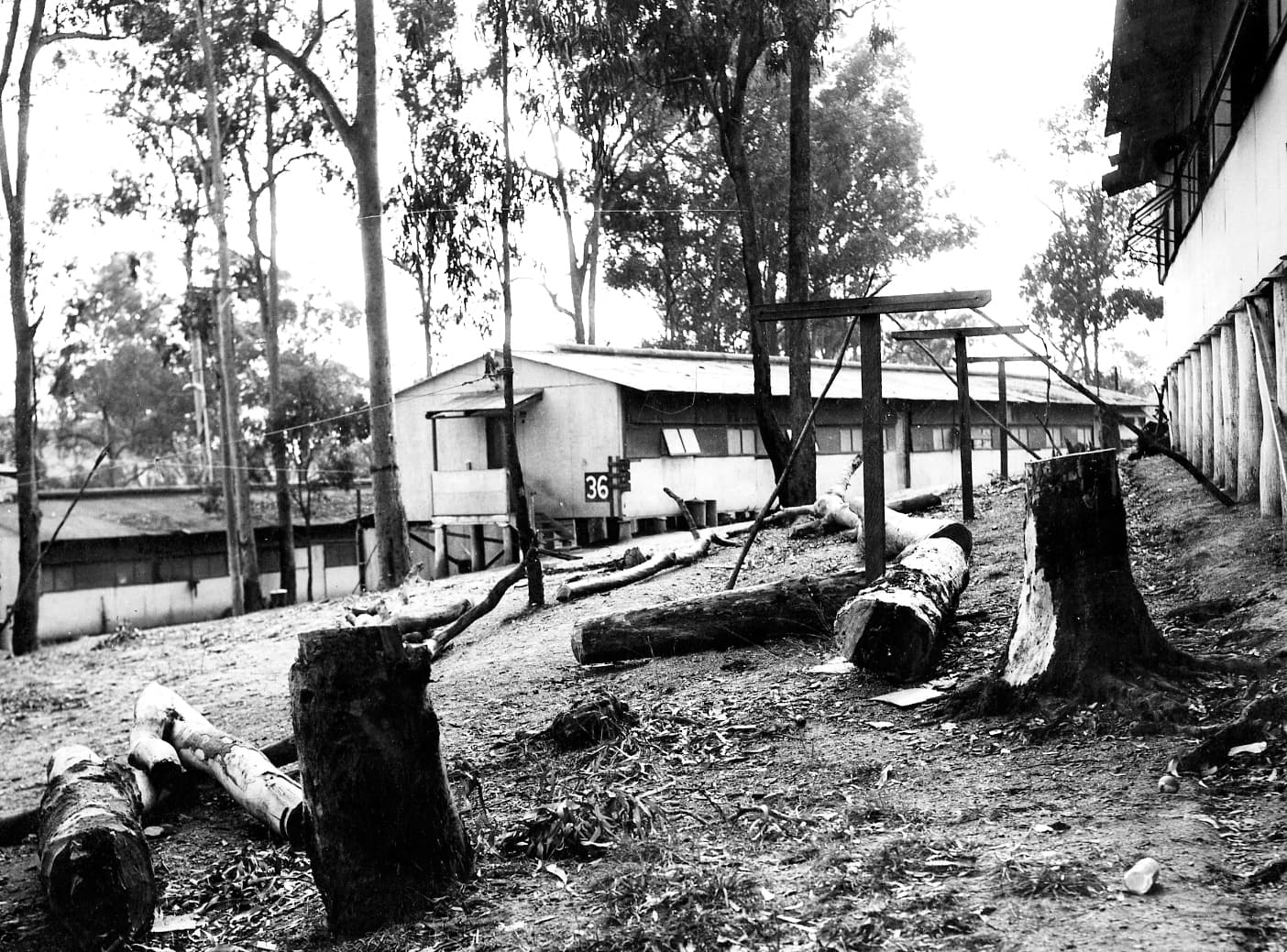
Victoria Park - RAAF War-Time Huts in the 1950s. Credit Brisbane City Archives
A good walk spoiled and WWII
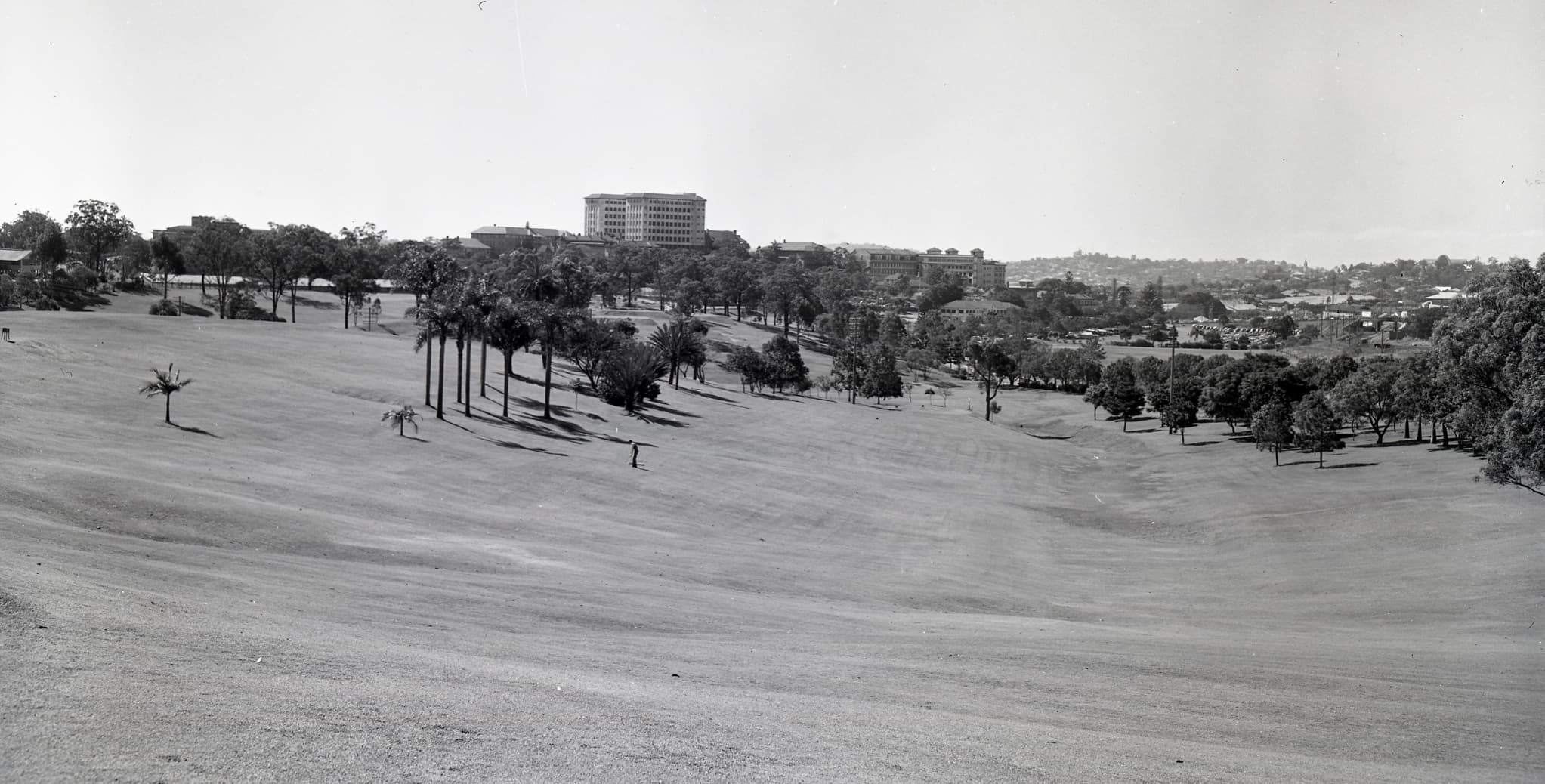
A significant phase of change occurred in 1930s when the municipal golf course was created. With the course altered nine times between 1931 and 2001, the earthworks — shaping new hills, filling low-lying sections and clearing vegetation — formed the familiar fairways that are now the rolling green hills most of us associate with Victoria Park.
The park also did its part during World War II, with large sections converted into Camp Victoria Park, a major military base with accommodation huts, gun emplacements and support facilities for Australian and United States forces. After the war, the park was re‑landscaped once again, with former military buildings repurposed for temporary housing before eventual removal and further renewal for recreation and community sport.
.%20(n.d.)%20State%20Library%20of%20Queensland.jpg&w=3840&q=75)
United States Army Service of Supply Camp at Victoria Park, Herston, Brisbane, 1943-1944, Photographs (0001-0004). (n.d.) Credit State Library of Queensland
Brisbane’s transport boom
More recent decades brought further change along the park’s edges through major bus, rail and road projects, including the Inner City Bypass, Inner Northern Busway and Legacy Way tunnel.
With earlier waterholes and low-lying gullies filled with municipal waste, diverted or reconstructed over time, a man-made ornamental lake was first installed in the 1930s. Later redevelopments in the early 2000s mean that the water bodies visible today are not original or naturally formed.
The park’s vegetation has evolved alongside these changes. Large areas of native and non-native species were replanted during the golf course era, again during WWII construction, and later through major park upgrades. Many of the trees and plantings visible today are the result of decades of renewal.
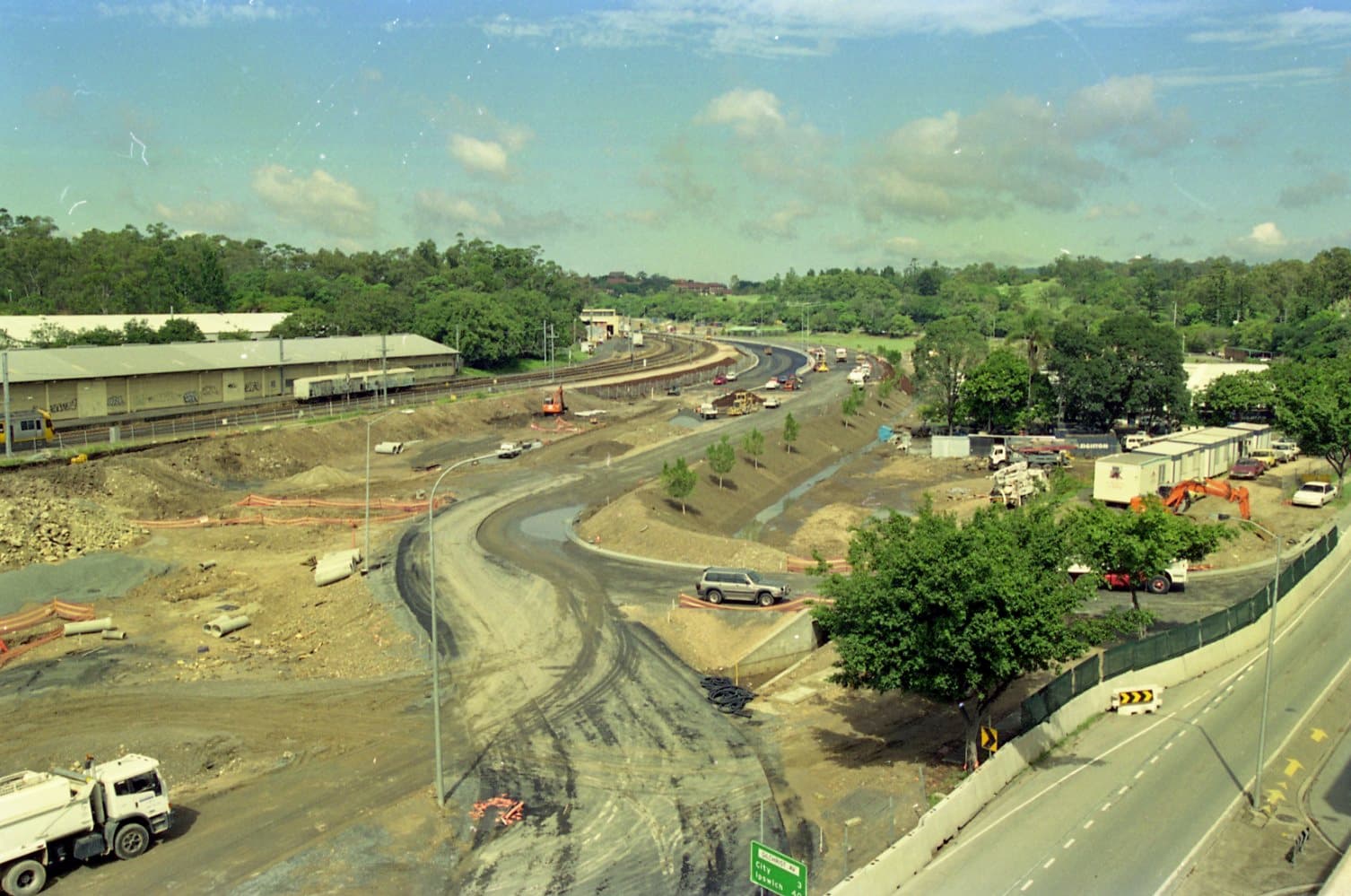
Inner City Bypass through Victoria Park - Construction Progress - Bowen Hill 2001. Credit Brisbane City Archives
In 2021, the park’s long history as a golf course came to an end with Victoria Park Golf Course closing on 30 June, reopening on 1 July as a 64-hectare public park.
Victoria Park has always adapted to meet the needs of Brisbane and its people. Its next chapter continues this story — respecting its long history as a place where Queenslanders gather, play sport and celebrate.
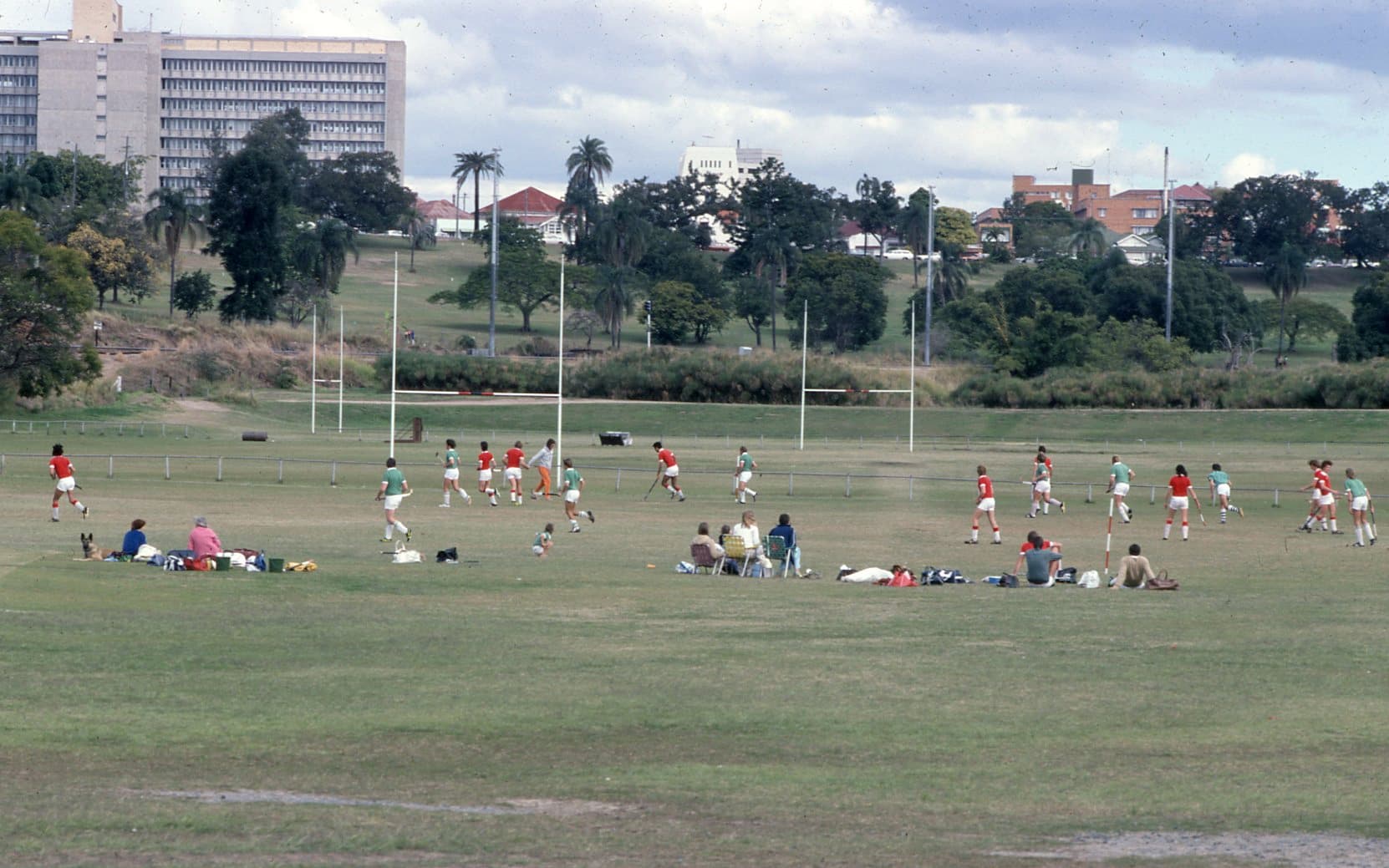
Victoria park hockey game 1977. Credit Brisbane City Archives
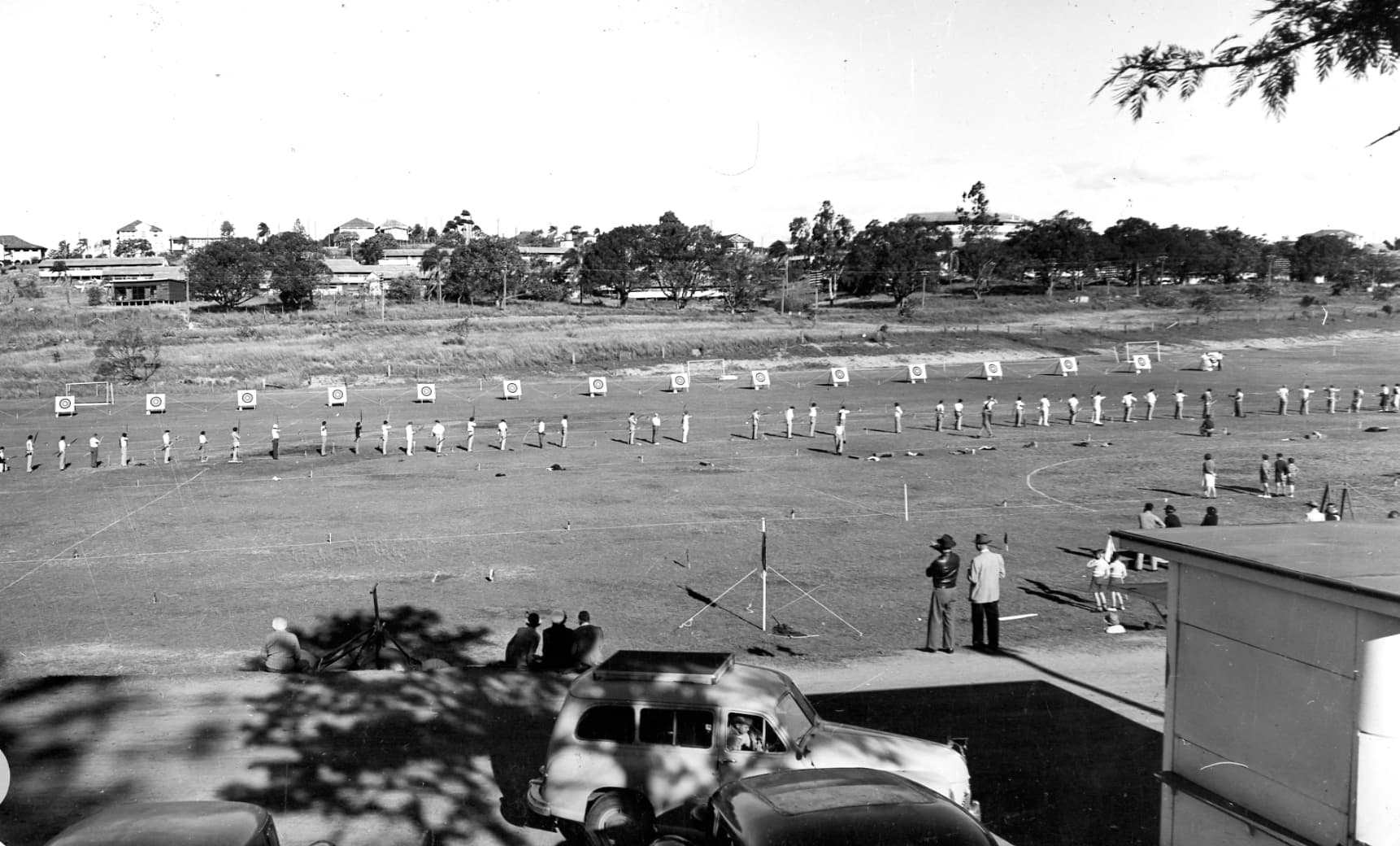
Victoria Park archery competition 1950s. Credit Brisbane City Archives
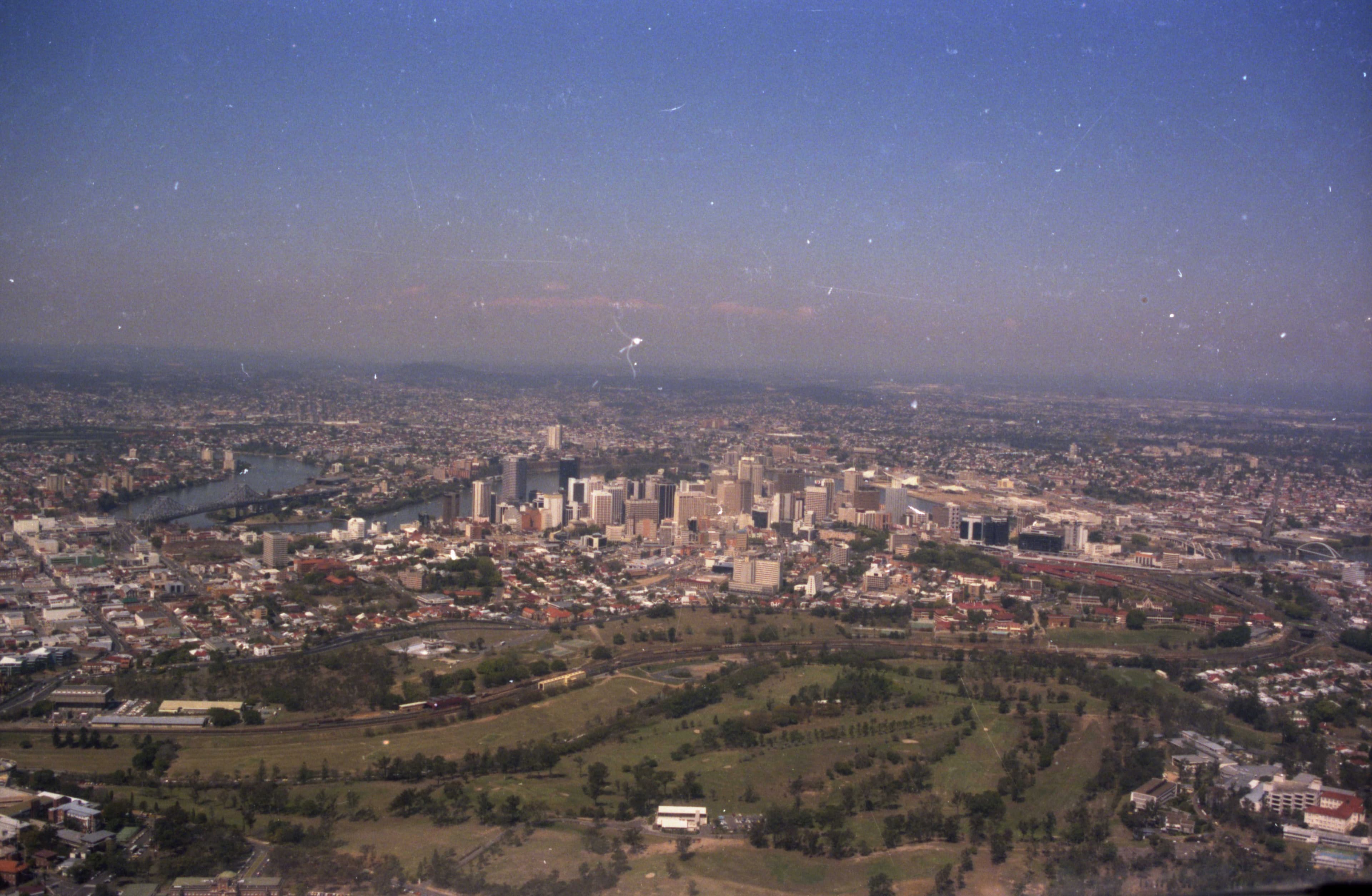
Aerial View of Victoria Park - Herston - 1986. Credit Brisbane City Archives
This article is part of a three‑part series exploring the past, present and future of Victoria Park. You can also read:
GIICA is committed to transparent, evidence‑based communication. This article draws on established historical and heritage research for Victoria Park / Barrambin, including:
- Victoria Park / Barrambin Archaeological Management Plan (Australian Heritage Specialists Pty Ltd, October 2025)
- Queensland Heritage Register – Victoria Park
- Historical imagery and records from the State Library of Queensland and Brisbane City Archives.
- Brisbane City Council