Brisbane Stadium location locked in as design forges ahead
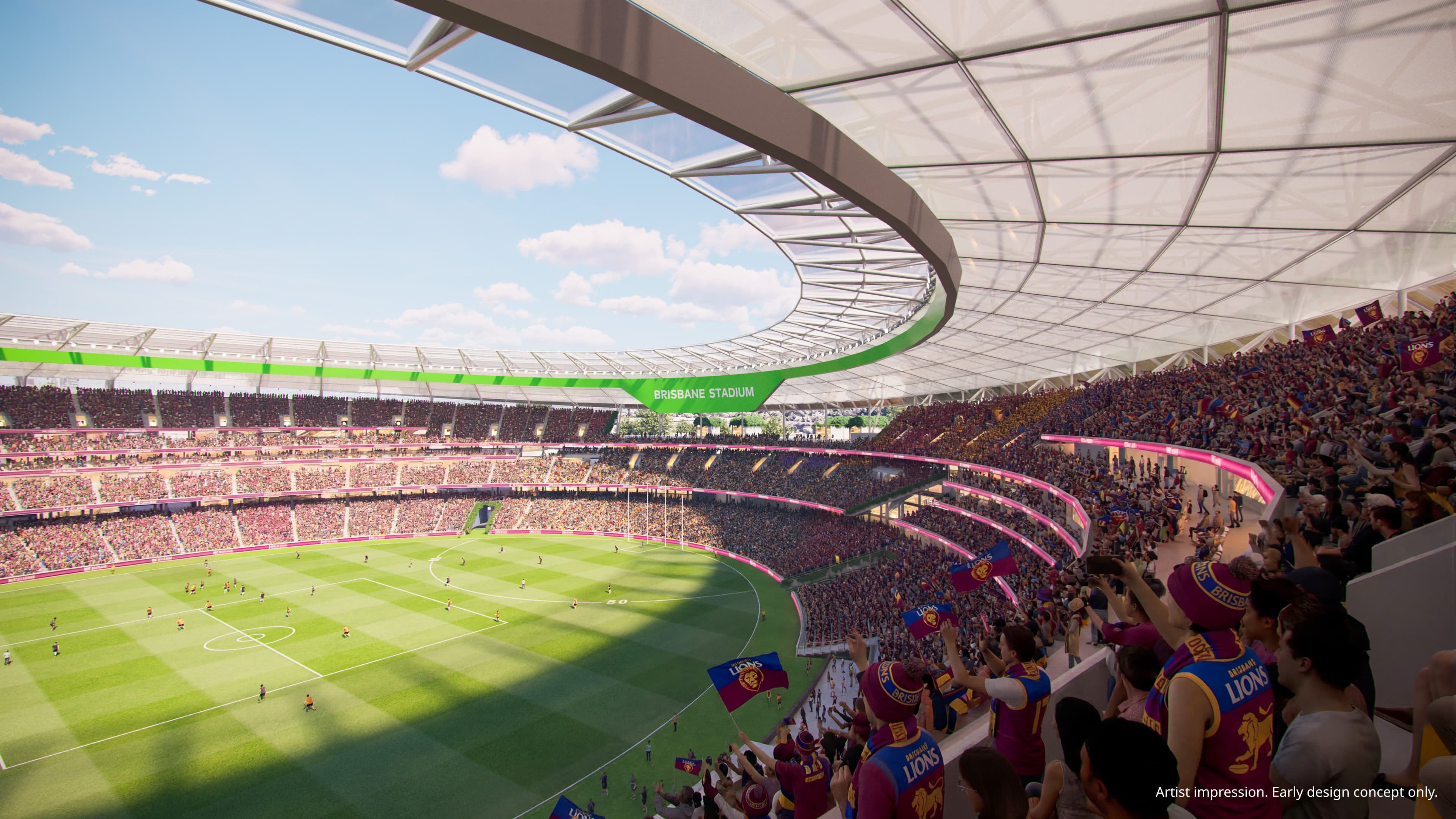
In just over two months, the stadium design team from COX Architecture, Hassell and Azusa Sekkei has powered through an enormous amount of planning and analysis — laying the foundations for what will become one of Brisbane’s most iconic venues
Design work on the new Brisbane Stadium is forging ahead with three big decisions now locked in including field size, field orientation and location for the stadium within Victoria Park.
Development of the early concept design for the Stadium, which will host the opening and closing ceremonies and athletics at the 2032 Olympic and Paralympic Games before becoming the city’s main stadium after the Games, will continue over coming months but some key aspects have already been agreed upon including:
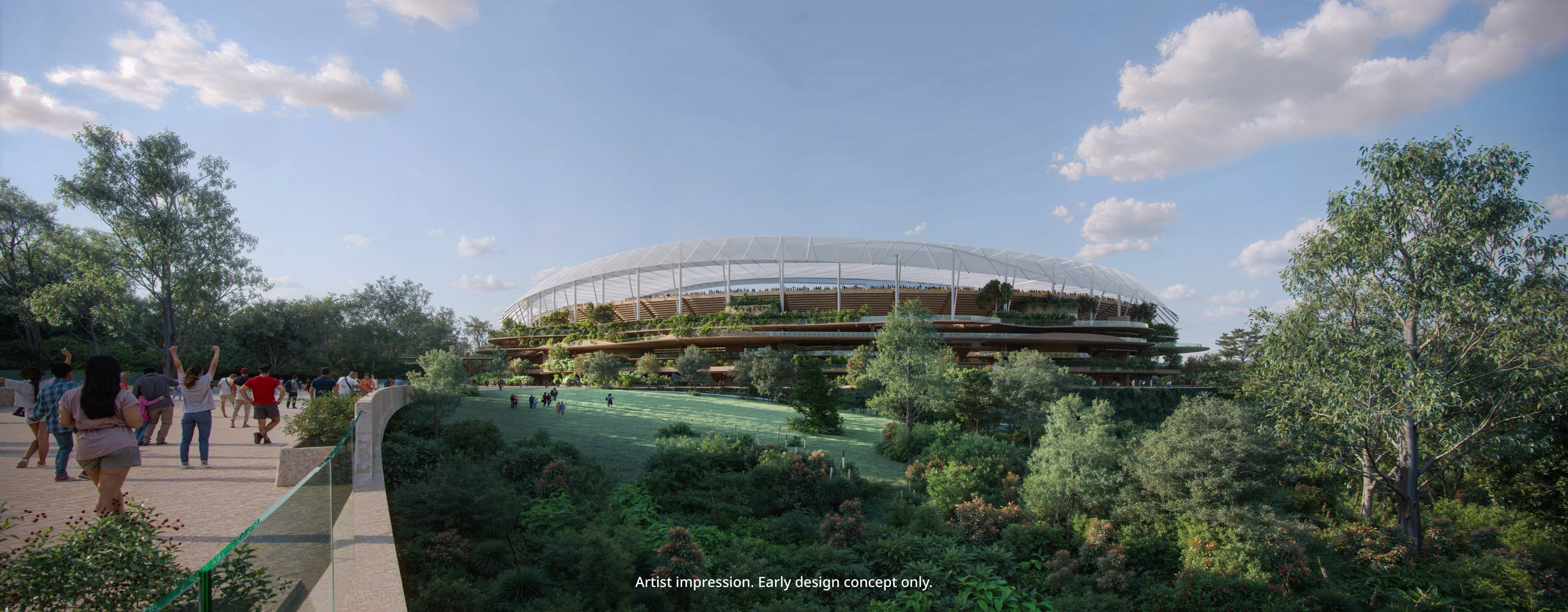
- The stadium’s location in Victoria Park – a central position near Gilchrist Avenue that maximises access to public transport and nestles the stadium in a naturally occurring amphitheatre.
- The field of play size and shape – to be the equivalent of the Melbourne Cricket Ground (MCG), supported by AFL, Cricket Australia, concert promotors and Brisbane 2032.
- Field orientation – east–west configuration after analysis of sun position, winds and legacy operational needs for AFL and cricket.
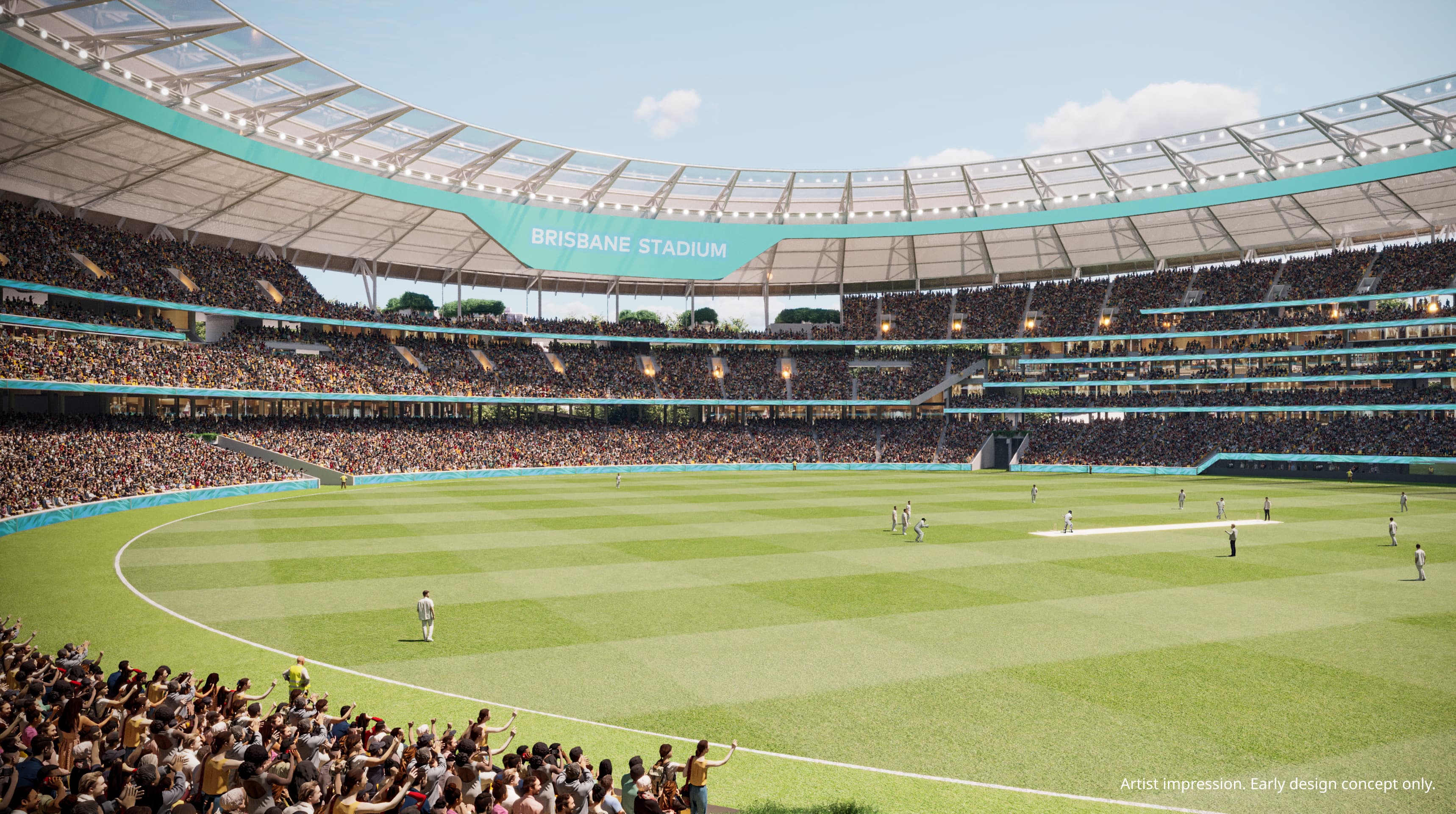
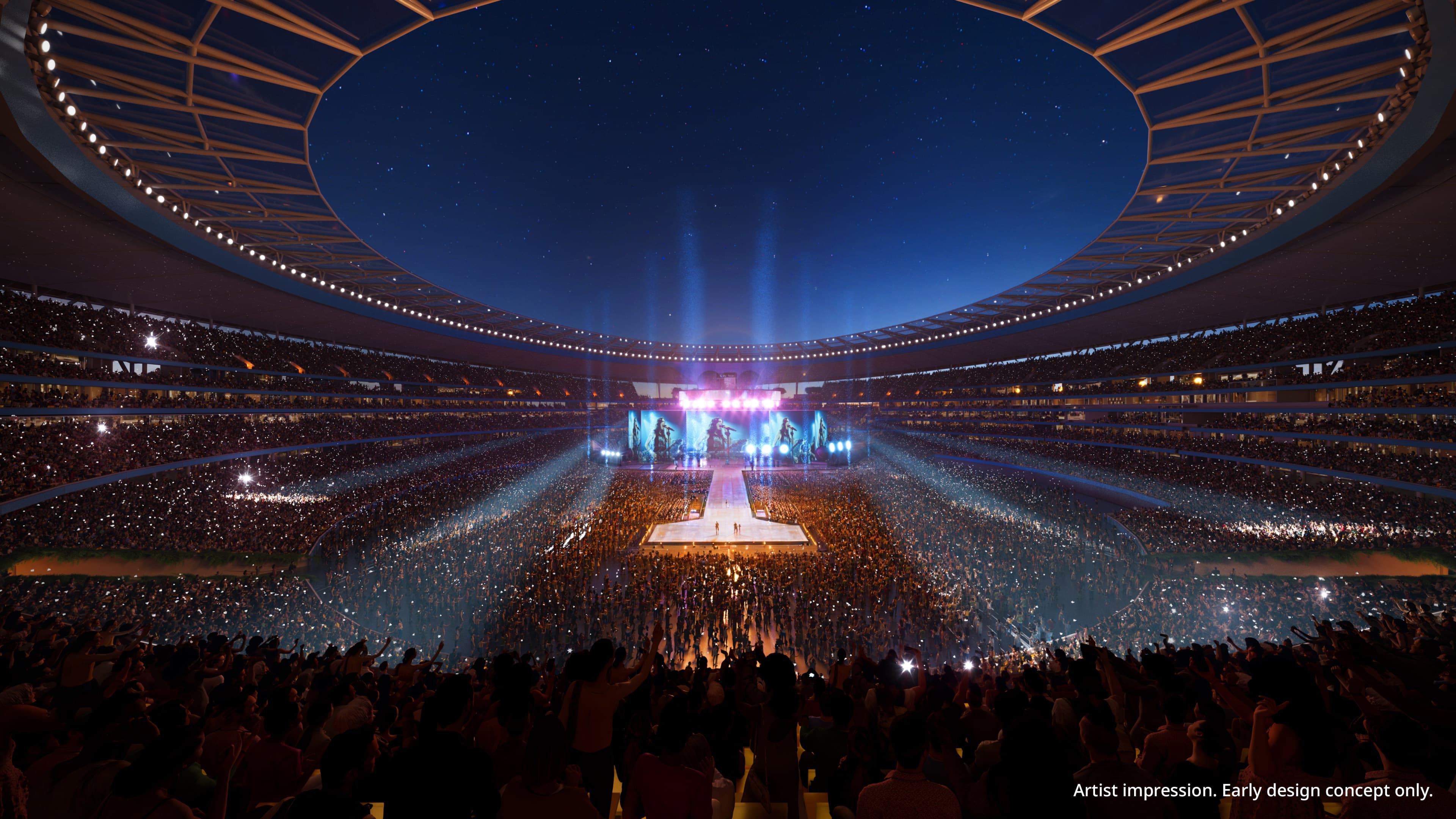
Interior render of the new Brisbane Stadium
The proposed siting of the new Stadium will seamlessly connect with existing transport infrastructure and allow it to be embedded into the existing topography. This position will also reduce congestion in the critical northeast zone of the park where spectator entry points converge.
The east-west orientation for the field of play was settled after workshop discussions with AFL and cricket and analysis of sun position, winds, and the overall stadium footprint. This orientation better suits how the stadium will work on event days eliminates the requirement for a second media centre under combined AFL and cricket usage.
The field of play size and shape was determined after comparison of four major oval venues across Australia – the Gabba, Perth’s Optus Stadium, the MCG and Marvel Stadium in Melbourne. Optus and the MCG are significantly longer than Marvel and the Gabba, better accommodating an athletics track.
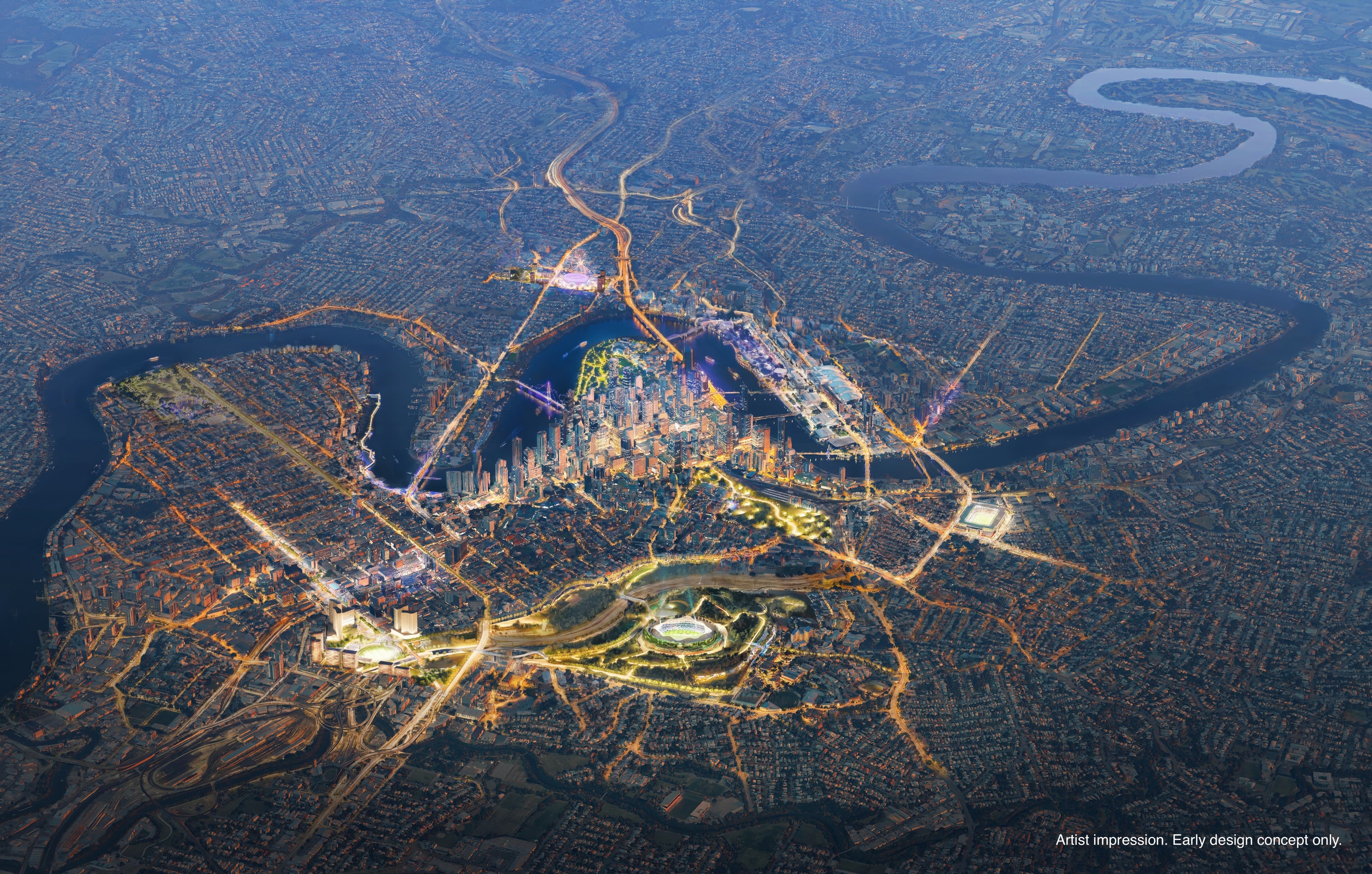
Image credit: Queensland Government
The Stadium early concept design continues to build upon the winning “Queensland response” that embeds the new Stadium into Victoria Park’s topography with a verandah inspiration, floating roof form, and bridge connectivity. The Design Statement for the latest round of concepts states:
“The concept is simple and deliberate: a Stadium in the Landscape. Rather than placing a 63,000-seat object on top of Victoria Park, the stadium will nestle into the parklands and allow the landform and vegetation to do the work.
"The stadium bowl sits in a valley between two ridges ... Spectators pass through nature and parkland rather than climb toward a monument. The park flows over and around the venue, softening its edge and binding it to the park and forest slopes. It is less a building in a park, but instead a park that flows around and through a stadium.
“The design privileges shade, breeze, movement, and everyday access. It is active on event days, but generous and open on all other days. In legacy mode, the Stadium is not an isolated venue but a catalyst for a healthier, more connected city, embedding biodiversity, cultural continuity, and community life at the centre of Brisbane’s Olympic story.”
GIICA CEO, Simon Crooks, said as the design work progresses over the coming weeks and months on the new Brisbane Stadium we are seeing a truly Queensland-take on the traditional stadium emerge, bringing the outside in and celebrating our lifestyle and natural environment.
“It is an exciting time for the team here at GIICA, and all of Queensland, as we work through the rigorous design process to bring the stadium vision to life, and later this year start early works and in 2027 construction.”
“It is great to see the vision the design team has shared in January is now being tested and developed with stakeholder input," said COX Architecture Director and Chair Richard Coulson.
"It retains the ambition of a venue that responds to place with the inclusion of technology that people will expect in a world class venue.
“The evolving arrangement of the Stadium in the park will be a key part of unlocking the connectivity of the park with the wider precinct and the city.”
“We recognise this as a once-in-a-generation opportunity to lead the design of Brisbane Stadium, a venue that will showcase Queensland to the world while truly serving the local community every day," added Hassell Managing Principal Lucy O’Driscoll.
“Every element of our design responds to Queensland’s unique climate and lifestyle, ensuring the stadium can accommodate not only global events, but also becomes an enduring part of the state’s daily life and legacy for generations to come.”
Over the coming months, the concept design will continue to be refined, with a focus on creating a stadium that feels unmistakably Brisbane ensuring we are comfortable in our climate, connected to public transport, and welcoming even on non‑event days.
With early site preparations due to begin from 1 June 2026 and early works expected later in 2026, Queenslanders will start to see the project shift from plans to progress as this new major events home takes its next steps toward 2032 and beyond.
The new Brisbane Stadium is part of the $7.1 billion Games Venues Infrastructure Program jointly funded by the Australian and Queensland Governments and will be delivered by the Games Independent Infrastructure and Coordination Authority (GIICA).