Melbourne’s sporting heart serves as lasting legacy for 1956 Games
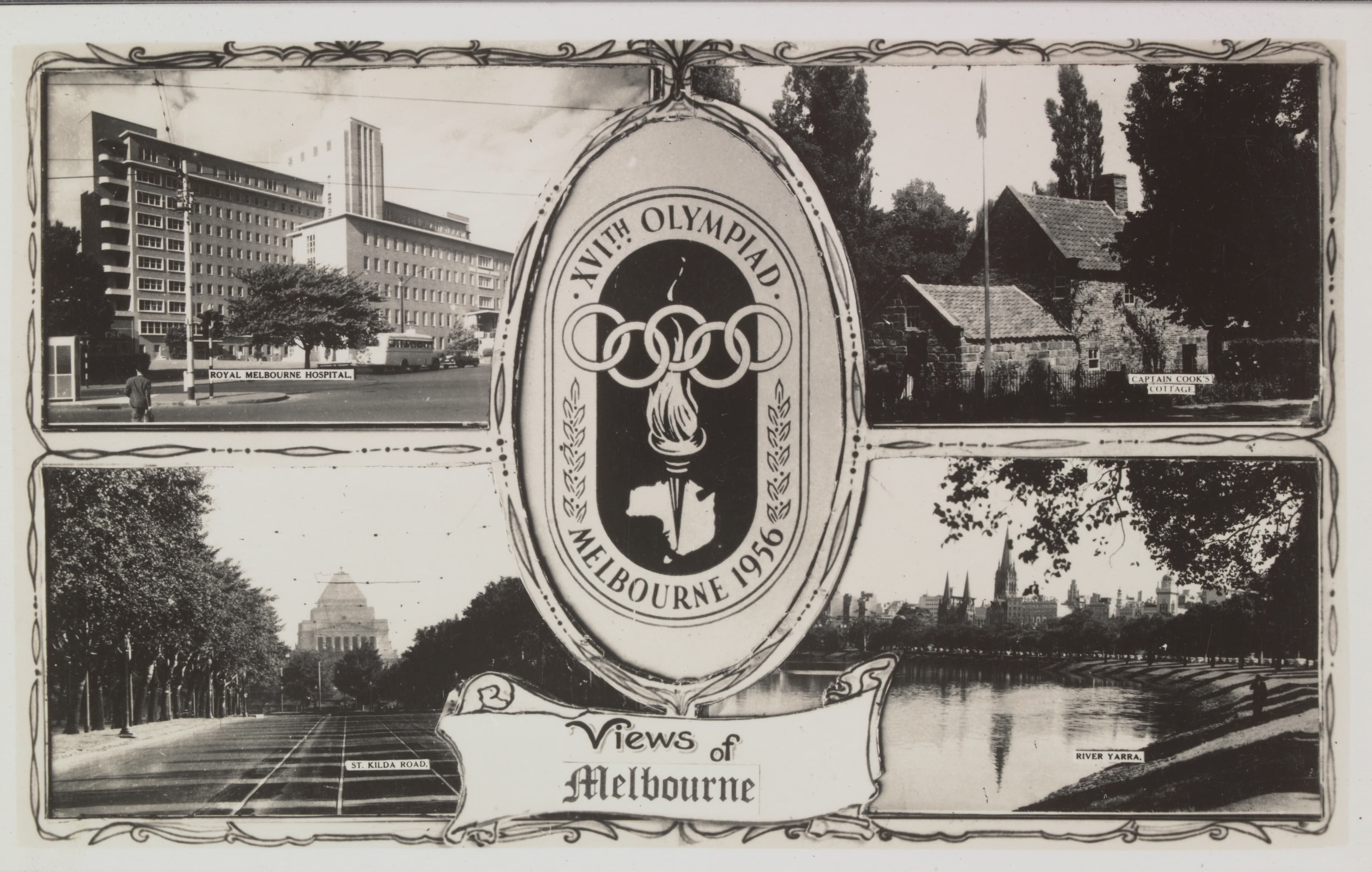
The creation of an Olympic Park precinct for the 1956 Melbourne Games close to the city centre continues to deliver an enduring legacy more than a generation on.
This month marks 70 years since the Opening Ceremony of the Games of the XVI Olympiad on 22 November 1956, the first time Australia hosted the Olympics, delivering what became known as the ‘Friendly Games’.
The Games created history on a number of fronts, being the first held outside of Europe or the United States, the first held in the southern hemisphere, the first-time television broadcasting rights were sold, and the first Games in which all athletes walked together as one in the Closing Ceremony, after a suggestion to organisers by Australian schoolboy John Ian Wing.
The Melbourne Games also heralded the arrival of Australia as an Olympic sporting force, with swimmers Dawn Fraser and Murray Rose and track sprinters Betty Cuthbert and Shirley Strickland spearheading Australia to third on the medal table.
John Landy, Olympic Oath. Oppenheim, J. (1956). State Library Victoria
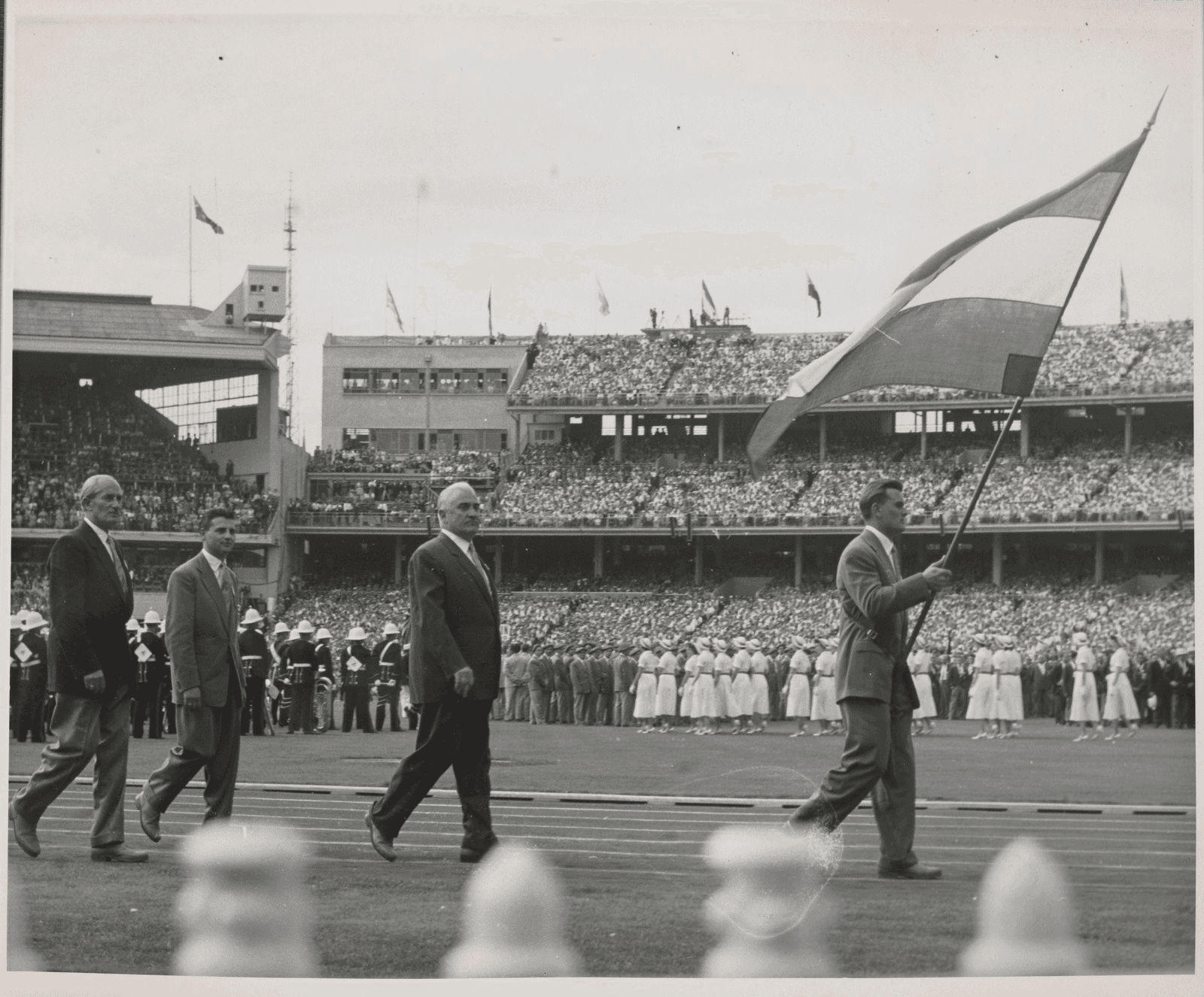
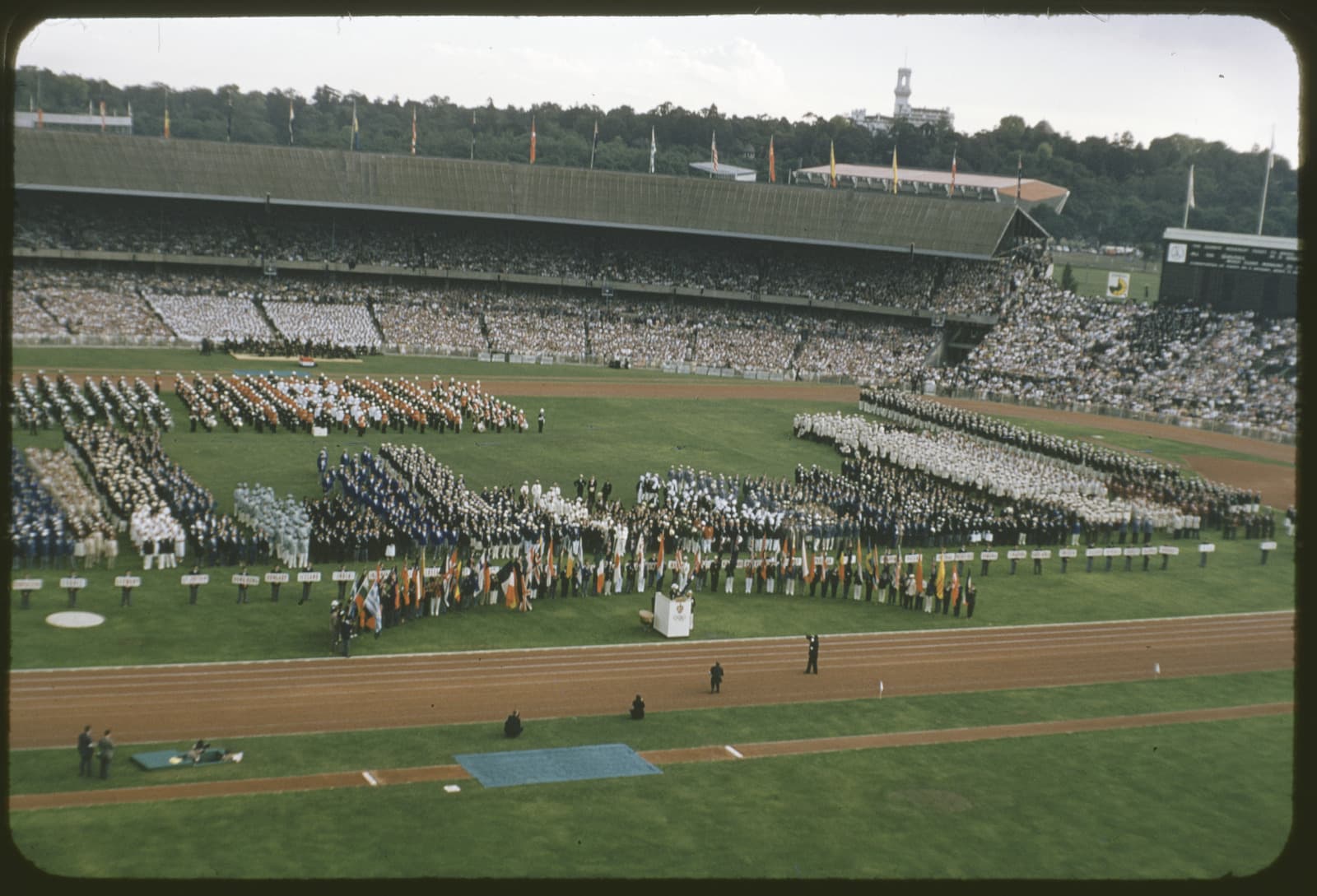
Team marching at opening ceremony of Melbourne Olympic Games, Morrison, John R. photographer, State Library Victoria.
In terms of legacy, the 1956 Games helped drive Melbourne’s development as a sporting capital, as a key contributor to the national economy, and a range of infrastructure projects that benefitted the community.
At the heart of that Games infrastructure legacy was the creation of a central sports and entertainment hub close to the city centre that has continued to evolve over the ensuing 70 years. Situated between the Yarra River and Melbourne Park, the Olympic Park consolidated a long history as a sporting and recreational area dating back to 1860.
The park’s redevelopment for the 1956 Games as the central Olympic precinct comprised the Melbourne Cricket Ground (MCG), the Olympic Park Stadium, the Olympic Swimming Pool and the Olympic Velodrome.

Pratt, Charles Daniel, 1892-1968, photographer. Airspy (Firm), photographer., Aerial views of the Melbourne Cricket Ground, State Library Victoria
Easily accessible through pedestrian bridges, rail stations, trams, roads and a river jetty that serve the precinct, the Olympic Park is now a popular recreational venue which annually stages up to 1,000 publicly accessible events, from community activities, including family days and charity fun-runs, to world-class sporting and entertainment events.
The MCG has continued to be enhanced and developed over the past 70 years and now stands as one of the world’s great stadiums with a capacity of over 100,000 people.
Serving as the main stadium of the 1956 Games, the MCG is now home to the Australian Sports Museum which tells the nation’s Olympic story. There are also related artworks, such as a tapestry and bronze doors, commemorating the 1956 Games. Special rooms inside the MCG are named after Olympians Betty Cuthbert and John Landy, and there is a corporate Olympic Room often used for Olympic themed events, in addition to life-size statues of 1956 Olympians Betty Cuthbert and Shirley Strickland outside the ground.
Elsewhere in Olympic Park, the swimming stadium still stands, now known as the KGM Centre and listed in the Victorian Heritage Register having won many awards since it opened as an early example of a pre-tensioned steel-framed construction.
The building has been twice-renovated as community demands changed, the pool filled-in during the early 1980s as the building was converted to the Melbourne Sports and Entertainment Centre, hosting concerts by Elton John and Queen as well as becoming the home of basketball in Victoria at that time.
Another renovation in 2002 saw the building return to its distinctive original shape, an eye-catching inverted pyramid, to serve as a training and administrative base for Collingwood Football Club including a world-class gymnasium, 25m lap pool, exhibition space, corporate event and function rooms – the centre’s community and training facilities also open to recreational athletes and hosting grass-roots leisure and sports events.
The other two 1956 venues, the Olympic Park stadium and velodrome, have since been replaced by new facilities including a number of other elite sporting facilities built across the precinct.
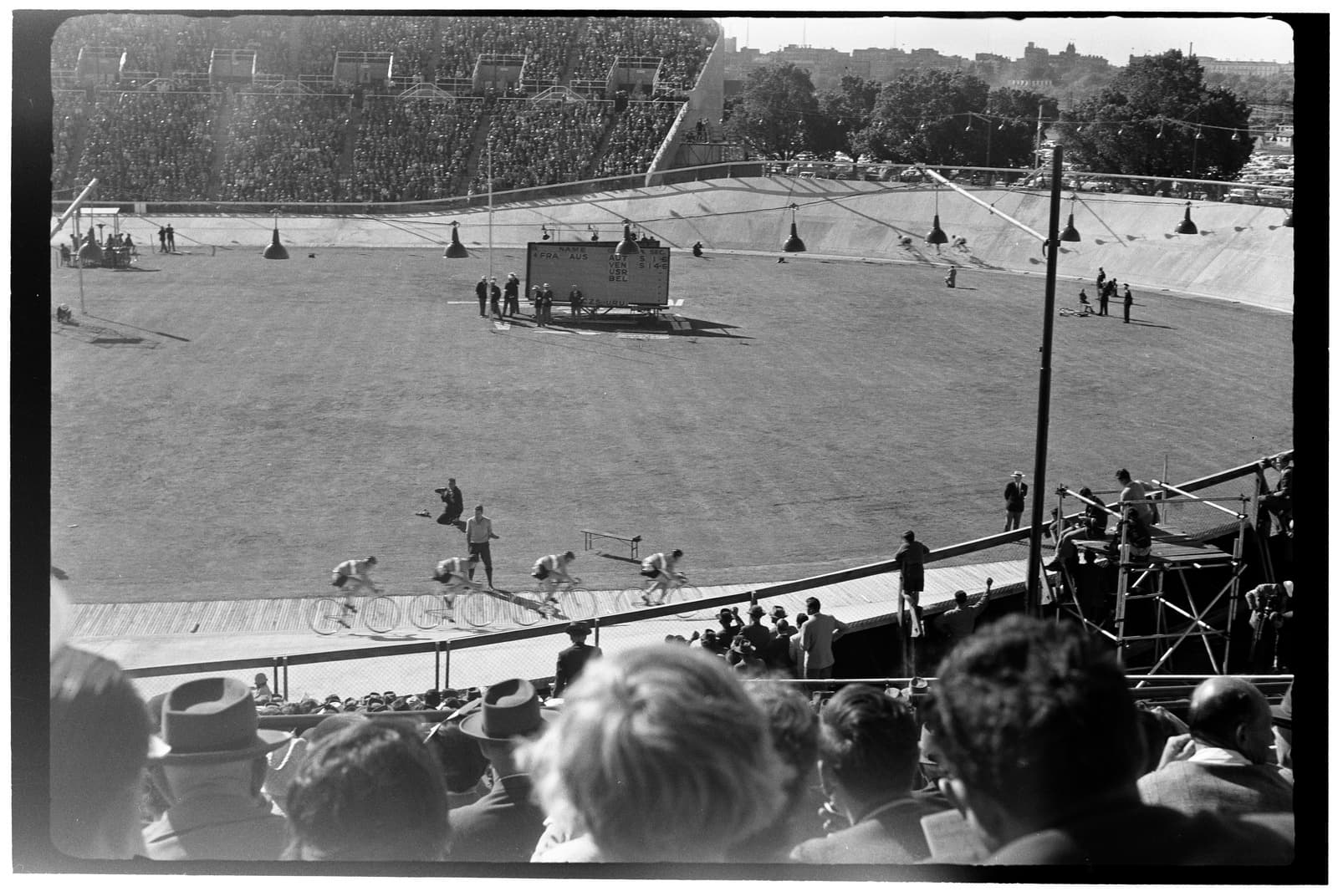
Velodrome at Olympic Park, Melbourne Olympic Games, 1956, Fraser, A. G. (1956). State Library Victoria
Those include Melbourne Park, home to the Australian Open tennis tournament, one of the world’s four Grand Slams, as well as Melbourne Rectangular Stadium (now known as AAMI Park) which opened in 2010, a 30,000-capacity venue which is the home ground of the NRL’s Melbourne Storm and the A League’s Melbourne Victory and Melbourne City.
Elsewhere across Melbourne, the 1956 Games also saw the creation of an athletes’ village in Heidelberg West, designed as a new suburb to help alleviate Victoria’s housing shortages at the time, the Olympic Village marked a departure from the tradition of housing athletes in dorms and hotels.
Several technical and sporting innovations also took place at the 1956 Games including the introduction of a semi-automatic, digital-display timing device in the swimming pool, which automatically recorded finish times. New technology also made an appearance in fencing, with the introduction of the electric foil, which was installed on each track and made the scoring of bouts easier.
Seventy years on, Melbourne’s enduring Olympic legacy offers a reminder that the value of Games infrastructure extends well beyond the Closing Ceremony. That same long-term focus is guiding the delivery of new and upgraded venues and precincts ahead of the 2032 Olympic and Paralympic Games, with facilities designed to adapt to changing needs and serve local Queensland communities long after the Games.